


Food is the one element every single guest experiences and remembers. Exceptional catering creates joy, sparks conversation, and leaves guests raving about your wedding for years. Mediocre food, no matter how beautiful your venue or stunning your flowers, disappoints guests and undermines your entire celebration.
Yet catering represents your largest single expense after venue costs, typically consuming 25-35% of your total budget. With this significant investment and impact on guest experience, how to choose a wedding caterer who delivers both culinary excellence and flawless service?
This comprehensive guide provides everything you need to confidently select your wedding caterer. You’ll learn what separates exceptional caterers from mediocre ones, which questions expose experience levels, how to evaluate food quality through tastings, what service styles suit different celebrations, and how to avoid common catering mistakes.
Whether you’re just beginning your search or comparing final candidates, this framework ensures you book a caterer who makes your celebration delicious and memorable.
Let’s find your perfect caterer.
Understanding Catering Service Styles
Before evaluating caterers, understand service style options and their implications:
Plated Dinner Service
Guests seated at tables receive individually plated courses served by waitstaff.
Advantages:
- Elegant, formal presentation
- Guaranteed portion control
- Professional service experience
- Each guest receives exactly what they ordered
Considerations:
- Requires advance menu selections from guests
- More expensive due to higher staff requirements
- Slower service pace (30-45 minutes for full meal)
- Less food variety per person
Best for: Formal weddings, sophisticated celebrations, venues with adequate kitchen facilities, couples prioritizing elegant service over abundance.
Typical cost: $75-$150+ per person in Los Angeles
Buffet Service
Guests serve themselves from food stations with multiple dish options.
Advantages:
- More food variety and quantity
- Guests control portions and choices
- More affordable than plated service
- Creates mingling opportunities
- Accommodates dietary restrictions easily
Considerations:
- Lines can form (mitigate with multiple stations)
- Less formal aesthetic
- Requires more food preparation (guests often take more)
- Monitoring and replenishing needed
Best for: Casual to semi-formal weddings, celebrations emphasizing abundance, venues with adequate buffet space, budget-conscious couples wanting variety.
Typical cost: $50-$100+ per person in Los Angeles
Family-Style Service
Large platters placed on tables for guests to share and pass.
Advantages:
- Creates community and sharing atmosphere
- Abundant food presentation
- No buffet lines
- Feels generous and hospitable
- Works beautifully for cultural celebrations
Considerations:
- Requires significant table space
- Food timing crucial (must arrive hot simultaneously)
- Some guests may dominate platters
- More expensive than buffet
Best for: Armenian and other cultural weddings emphasizing hospitality, intimate celebrations, couples wanting communal dining experience.
Typical cost: $60-$120+ per person in Los Angeles
For cultural celebrations like Armenian weddings, family-style service often works best, honoring traditions of generous hospitality and shared meals.
Food Stations and Action Stations
Interactive stations where chefs prepare food to order or guests choose from specialized offerings.
Advantages:
- Entertainment element
- Fresh, hot food made to order
- Creates memorable experience
- Variety without buffet lines (if multiple stations)
Considerations:
- Requires adequate space
- More staff intensive
- Can be expensive
- Stations may form lines
Best for: Cocktail-style receptions, food-focused celebrations, couples wanting unique dining experience.
Typical cost: $65-$130+ per person in Los Angeles
Cocktail Reception (Passed Appetizers)

Waitstaff circulate with appetizer trays; no seated meal.
Advantages:
- Encourages mingling
- Lower cost than full meals
- Flexible space requirements
- Modern, sophisticated feel
Considerations:
- Not appropriate for evening events (guests expect dinner)
- Requires substantial appetizer quantity (8-12 pieces per person)
- Elderly guests may struggle without seating
- Some guests leave hungry if inadequate
Best for: Afternoon celebrations, cocktail parties, intimate gatherings under 75 guests.
Typical cost: $40-$80 per person in Los Angeles
Essential Qualities in Exceptional Caterers
Culinary Excellence
Food quality matters most:
What to look for:
- Fresh, high-quality ingredients
- Skillful preparation techniques
- Balanced flavors and seasoning
- Beautiful presentation
- Consistency across dishes
Red flags:
- Bland, underseasoned food
- Overcooked proteins
- Soggy vegetables
- Sloppy plating
- Inconsistent quality
Tastings are non-negotiable: Never book a caterer without tasting their food. Professional caterers expect and encourage tastings.
Service Excellence
Great food served poorly ruins guest experience:
Service quality indicators:
- Professional, courteous staff
- Proper service training
- Appropriate staff-to-guest ratios
- Efficient timing and coordination
- Problem-solving abilities
Staff ratios matter:
- Plated service: 1 server per 15-20 guests
- Buffet service: 1 server per 30-40 guests
- Cocktail service: 1 server per 25-30 guests
Kitchen capabilities: Adequate on-site kitchen facilities or professional catering kitchen ensure hot, fresh food arrives properly.
Experience and Reliability
Wedding-specific experience essential:
What to verify:
- Years in business (3+ years shows stability)
- Number of weddings catered (50+ minimum)
- Experience at your venue
- References from recent couples
- Professional licensing and insurance
Venue familiarity: Caterers experienced at your venue understand kitchen layouts, equipment access, timing, and logistics, preventing problems.
For guidance on choosing venues with excellent catering facilities, explore our Los Angeles wedding venues guide.
Menu Flexibility
Customization capabilities:
Quality caterers offer:
- Menu customization to your preferences
- Dietary accommodation (vegetarian, vegan, gluten-free, kosher, halal)
- Cultural cuisine expertise
- Seasonal menu adjustments
- Tastings with modification opportunities
Red flags:
- Rigid, unchangeable menus
- Limited dietary accommodation
- No customization without significant upcharges
- Unwillingness to discuss modifications
Questions Every Couple Must Ask
Bring these questions to every caterer interview:
Experience and Background
✓ “How many weddings do you cater annually?”
✓ “Have you catered events at our venue before?”
✓ “Can you provide references from recent weddings?”
✓ “Are you licensed and insured?”
✓ “Who will be the point person for our wedding?”
✓ “How many events do you do per day?” (Avoid caterers stretching across multiple events)
Menu and Food Quality
✓ “Can we schedule a tasting?”
✓ “Can we customize the menu?”
✓ “How do you source your ingredients?”
✓ “Can you accommodate dietary restrictions?” (Be specific about your needs)
✓ “What happens if we want to add or change menu items?”
✓ “Do you offer seasonal menus?”
✓ “Can you prepare traditional [cultural] dishes authentically?” (If applicable)
Service Details
✓ “What service style do you recommend for our celebration?”
✓ “How many staff will work our event?”
✓ “What’s your staff-to-guest ratio?”
✓ “What’s your service timeline from appetizers through dessert?”
✓ “How do you ensure food stays hot during service?”
✓ “What’s your backup plan if equipment fails?”
Logistics and Coordination
✓ “What kitchen facilities do you need?”
✓ “What time do you arrive for setup?”
✓ “How do you coordinate with other vendors?”
✓ “Who manages your service team on the wedding day?”
✓ “What rentals are included vs. what we need to source?”
✓ “How do you handle last-minute guest count changes?”
Pricing and Contracts
✓ “What’s included in your per-person pricing?”
✓ “What’s not included that costs extra?”
✓ “What are your service charge and tax rates?”
✓ “When is final headcount due?”
✓ “What’s your payment schedule?”
✓ “What’s your cancellation and refund policy?”
✓ “Are staffing costs included or separate?”
✓ “Do you charge cake-cutting fees if we bring an outside cake?”
Understanding wedding venue costs in Los Angeles helps you budget appropriately for catering as your largest expense component.
The Tasting Process: Evaluating Food Quality
Scheduling Your Tasting
When to taste: After narrowing to 2-3 final caterer candidates, schedule tastings.
Who attends: You and your partner, potentially parents if contributing financially. Don’t bring large groups; too many opinions complicate decisions.
What to expect:
- Sample portions of menu items you’re considering
- Opportunity to modify dishes based on feedback
- Discussion of presentation and service style
- Menu finalization and customization
What to Evaluate During Tastings
Flavor and seasoning:
- Are dishes well-seasoned or bland?
- Do flavors complement each other?
- Is there balance (not too salty, sweet, or spicy)?
- Do dishes taste fresh?
Preparation quality:
- Are proteins cooked properly (not over/underdone)?
- Are vegetables fresh and properly cooked?
- Is pasta al dente?
- Are sauces smooth and flavorful?
Temperature:
- Is hot food served hot?
- Are cold items properly chilled?
- Does caterer explain how they maintain temperatures during service?
Presentation:
- Does plating look professional?
- Are portions appropriate?
- Would this photograph well?
- Does presentation match your wedding aesthetic?
Dietary accommodations:
- If you requested special dietary samples, do they taste as good as standard options?
- Do vegetarian/vegan options feel like full meals, not afterthoughts?
Red Flags During Tastings
❌ Food tastes significantly different from what you expected
❌ Caterer seems defensive about feedback
❌ Samples feel hastily prepared
❌ Dietary restriction samples are clearly inferior
❌ You’re not excited about any dishes
❌ Portions seem very small
❌ Food is lukewarm or improperly stored
Special Catering Considerations
Cultural Cuisine Expertise
Armenian weddings: Traditional dishes require specific expertise:
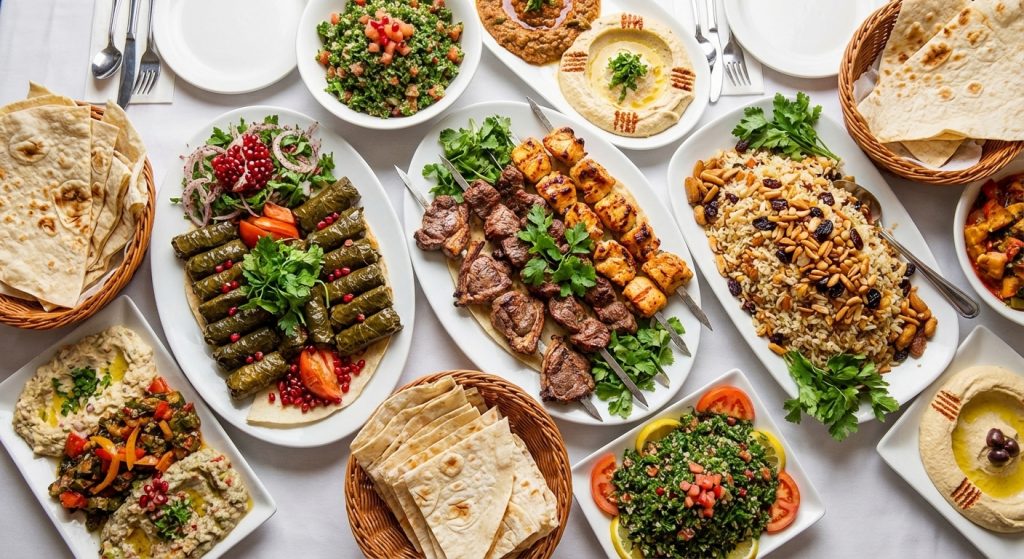
Essential Armenian dishes:
- Dolma (stuffed grape leaves)
- Khorovats (grilled meats and kebabs)
- Pilaf with vermicelli
- Lavash bread service
- Traditional salads and mezze
- Baklava and gata for dessert
What to verify:
- Caterer has prepared these dishes before
- They understand traditional preparation methods
- Flavors are authentic, not Americanized interpretations
- They can handle family-style service typical for Armenian celebrations
For venues specializing in Armenian cuisine, explore Armenian banquet halls in Glendale where in-house catering teams have generational expertise.
Other cultural cuisines: Indian, Persian, Mexican, Chinese, and other cultural weddings require caterers with authentic recipe knowledge and cultural sensitivity.
Dietary Restrictions and Allergies
Common restrictions to accommodate:
- Vegetarian and vegan
- Gluten-free
- Dairy-free
- Nut allergies
- Kosher or halal requirements
- Low-carb or keto preferences
How to handle:
- Collect dietary restrictions with RSVPs
- Provide final counts to caterer 2-3 weeks before wedding
- Ensure restricted meals are clearly marked for serving staff
- Consider whether restricted options are available as regular menu choices (often more inclusive)
Cocktail Hour and Bar Service
Cocktail hour catering:
- Typically 5-8 passed appetizer varieties
- 6-8 pieces per person minimum
- Mix of hot and cold options
- Variety of proteins, vegetables, and vegetarian options
Bar coordination:
- Some caterers provide bar service; others only food
- Clarify who’s responsible for bar setup and staffing
- Understand alcohol provision options (caterer-provided vs. client-provided with corkage fees)
Cake and Dessert
Cake cutting fees:
- Many caterers charge $2-$5 per person if you bring an outside cake
- Some include cake cutting in packages
- Clarify before signing contracts
Dessert options:
- Wedding cake only
- Cake plus dessert bar
- Plated dessert service
- Cultural desserts (baklava, etc.)
Catering Costs: Understanding Pricing
Los Angeles Catering Price Ranges
Budget-friendly ($40-$65 per person):
- Buffet service
- Limited menu options
- Basic presentations
- Smaller staff ratios
Mid-range ($65-$100 per person):
- Buffet or family-style service
- More menu variety
- Professional presentation
- Adequate staffing
- Some customization
Upscale ($100-$150 per person):
- Plated or elevated family-style service
- Extensive menu options
- Gourmet preparations
- Beautiful presentation
- Full customization
- Higher staff ratios
Luxury ($150-$250+ per person):
- Multi-course plated dinners
- Premium ingredients
- Celebrity chef involvement
- Exceptional presentation
- White-glove service
What’s Included vs. Additional Costs
Typically included:
- Food preparation and service
- Service staff
- Basic serving utensils and chafing dishes
- Setup and breakdown
Often additional:
- Rentals (tables, chairs, linens, china, glassware)
- Service charges (18-22% of food/beverage costs)
- Sales tax (9-10% in LA County)
- Bar service and bartenders
- Cake cutting fees
- Overtime charges
- Coordination services
Calculate true cost: A caterer quoting $80 per person becomes $100+ after service charges and tax. Always ask for itemized quotes including all fees.
Money-Saving Strategies
Choose less expensive proteins: Chicken and pork cost significantly less than beef tenderloin or salmon.
Simplify menu: Three entrée choices instead of five reduces preparation costs.
Seasonal ingredients: In-season produce and proteins cost less and taste better.
Buffet over plated: Saves on staffing costs while providing more variety.
Limit passed appetizers: Stationary appetizer displays require less staff than passed service.
Day-of-week flexibility: Some caterers discount Friday or Sunday events.
Working with Venue In-House Catering
Many venues, particularly Glendale wedding venues and established ballrooms, require in-house catering.
Advantages of In-House Catering
Simplified logistics: One vendor for venue and food streamlines coordination.
Known quantities: Venue staff knows kitchen intimately, preventing equipment issues.
Established relationships: Coordination with other vendors is seamless.
Reduced stress: Fewer moving parts to manage.
Often better value: Bundled pricing can be more affordable than separate venue and catering.
Evaluating In-House Catering
Don’t assume quality: Some venue caterers are exceptional; others mediocre. Always taste before booking venue.
Ask specific questions:
- Can we customize menus?
- What’s the quality of ingredients?
- Can we see photos from recent weddings?
- What are our options if we’re not satisfied during tasting?
Consider venue change: If venue catering is poor and they don’t allow outside caterers, consider different venues. Food is too important to compromise.
Red Flags: When to Keep Looking
Quality Red Flags
❌ Subpar food during tasting
❌ Unwillingness to provide tastings
❌ No customization options
❌ Poor presentation
❌ Bland or oversalted food
Service Red Flags
❌ Inadequate staff-to-guest ratios
❌ Unprofessional communication
❌ No venue experience
❌ Unclear service timeline
❌ No contingency plans
Business Red Flags
❌ No proper licensing or insurance
❌ No written contracts
❌ Vague pricing without itemization
❌ No references available
❌ Extremely low pricing (suggests quality issues)
❌ Pressure to book immediately
Experience Red Flags
❌ Fewer than 25 weddings catered
❌ No experience with your guest count size
❌ Unfamiliar with your venue
❌ Can’t accommodate dietary restrictions
❌ Poor online reviews
Timeline: When to Book and Plan
Booking Timeline
In-house catering: Books when you book venue (12-18 months ahead for peak dates)
Outside catering:
- Peak season: 10-12 months ahead
- Off-peak: 6-9 months ahead
Book caterers after venue but relatively early in vendor booking process.
Planning Timeline
9-12 months before:
- Select caterer
- Review menu options
- Discuss service style
- Initial contract and deposit
4-6 months before:
- Schedule tasting
- Finalize menu
- Discuss special dietary needs
- Review service timeline
2-3 months before:
- Provide preliminary guest count
- Confirm rentals needed
- Review logistics with venue
2-4 weeks before:
- Provide final guest count
- Submit dietary restriction list
- Confirm timeline
- Final payment
Week of:
- Final confirmation
- Reconfirm any last-minute details
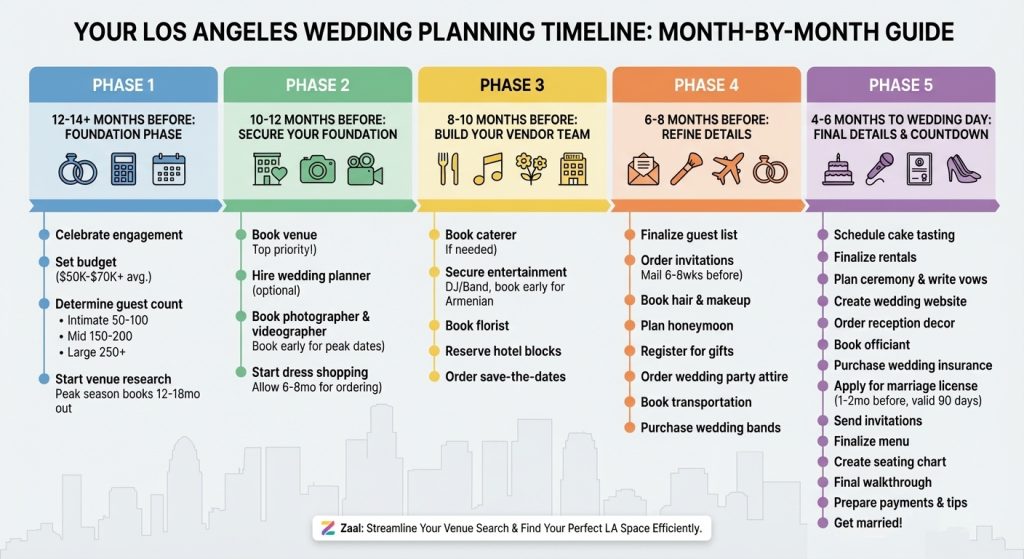
For comprehensive planning coordination, review our wedding planning timeline for Los Angeles.
Your Catering Success Starts with the Right Venue
Choosing a wedding caterer requires evaluating culinary skills, service quality, experience, flexibility, and value. The right caterer creates delicious memories your guests will rave about, while poor catering undermines even the most beautiful celebrations.
Your caterer’s performance is significantly influenced by venue facilities. Adequate kitchen space, proper equipment, convenient loading access, and professional venue coordination all contribute to catering excellence.
Find Venues Supporting Exceptional Catering
The venue you choose directly impacts your catering quality and options. Professional kitchen facilities, adequate preparation space, proper equipment, and experienced venue coordination create environments where caterers deliver their best work.
Zaal connects you with Los Angeles venues, providing the foundation for exceptional catering experiences.
Here’s how Zaal helps you choose catering-friendly venues:
✅ Kitchen facility information: Understand which venues have professional kitchens supporting excellent catering versus limited facilities constraining quality.
✅ In-house vs. outside catering clarity: See immediately which venues require in-house catering, offer preferred caterer lists, or allow any licensed caterer.
✅ Service style suitability: Learn which venues work best for plated service, buffet setups, family-style service, or food stations based on layout and facilities.
✅ Cultural cuisine expertise: For Armenian or other cultural weddings requiring specific traditional dishes, identify venues with proven culinary expertise in your cuisine.
✅ Coordination experience: Understand which venues work smoothly with catering teams versus those creating logistical challenges.
Whether you’re planning celebrations at venues with exceptional in-house catering like those featured in our Armenian banquet halls guide, or seeking venues allowing outside caterers for ultimate flexibility, choosing the right venue creates the foundation for delicious food and seamless service.
Many featured venues like Imperial Palace Banquet Hall and Kalaydjian Banquet Hall have decades of culinary excellence, with in-house catering teams perfecting traditional dishes through generations.
Explore catering-excellent venues on Zaal today to find spaces where culinary dreams become a delicious reality.
Your guests will remember the food. Choose venues that make it memorable for the right reasons.
Frequently Asked Questions
How much should I budget for wedding catering in Los Angeles?
Budget $65-$100 per person for quality wedding catering in Los Angeles, covering food, service, and basic staffing. For 150 guests, expect $9,750-$15,000 before service charges (18-22%) and tax (9-10%). Budget-friendly options start at $40-$65 per person for buffet service with simpler menus. Upscale catering runs $100-$150+ per person for plated service and gourmet preparations. Catering typically consumes 25-35% of your total wedding budget. For a $50,000 wedding, allocate $12,500-$17,500 for catering; for $80,000 wedding, plan $20,000-$28,000. Remember to add 25-30% to base quotes for service charges and tax.
Should I choose the venue’s in-house catering or hire an outside caterer?
Choose in-house catering if the food quality is excellent, pricing is competitive, and they offer sufficient customization. Advantages include simplified coordination, proven venue knowledge, and often better bundled pricing. However, always taste in-house catering before booking the venue; if quality disappoints and they don’t allow outside caterers, consider different venues. Outside caterers offer more flexibility and potentially better food quality but add coordination complexity. If your venue allows outside catering and you find an exceptional caterer whose food exceeds in-house options, the additional coordination effort often proves worthwhile. Food quality matters too much to compromise.
What questions should I ask during my catering tasting?
Essential questions include: Can you explain how each dish is prepared? What ingredients do you use? How will you maintain food temperature during service? Can you modify this dish to accommodate dietary restrictions? What will the presentation look like at our wedding? How does this portion size compare to what guests receive? Can we substitute ingredients or customize further? What happens if we don’t like something during tasting? Also ask practical questions about service: How long does each course take? How do you coordinate timing with other vendors? What’s your backup plan if equipment fails? Take notes on what you love and what needs adjustment.
How do I handle multiple dietary restrictions at my wedding?
Collect dietary restrictions through RSVPs, asking guests to specify restrictions clearly. Provide your caterer with an itemized list 2-3 weeks before the wedding, including restriction types and counts. Ensure your caterer can accommodate all restrictions while maintaining food quality; dietary-restricted meals should taste as delicious as standard options. Consider whether restricted options could be regular menu choices (making vegetarian options available to all reduces stigma). Ensure serving staff knows which meals are restricted and delivers them correctly. For common restrictions (vegetarian, gluten-free), many couples make these standard options rather than special requests, creating more inclusive dining experiences.
What’s the difference between buffet and family-style service?
Buffet service involves guests serving themselves from food stations with multiple dish options, creating variety, accommodating dietary needs easily, and typically costing less. However, buffets can create lines, feel less formal, and require monitoring. Family-style service places large platters on tables for guests to share and pass, creating communal dining experiences, feeling generous and hospitable, and working beautifully for cultural celebrations emphasizing hospitality. Family-style requires adequate table space, precise timing so all food arrives hot simultaneously, and typically costs more than buffets. Armenian and many other cultural weddings prefer family-style service for its hospitality emphasis and community-building nature.
When should I book my wedding caterer?
Book caterers 8-12 months before your wedding, especially for peak season Saturdays. If your venue requires in-house catering, you book catering when you book your venue (12-18 months ahead for popular dates). For outside caterers, book after securing your venue since date depends on venue availability. Top caterers book quickly for popular dates, and many maintain relationships with specific venues, making early booking advantageous. For off-peak dates (January-March, July-August) or Friday/Sunday weddings, 6-9 months ahead typically provides good selection. If planning a shorter timeline, contact caterers immediately; quality varies greatly among available last-minute options.
How many appetizers should I serve during cocktail hour?
Serve 6-8 passed appetizer pieces per guest during a standard 60-minute cocktail hour, with 5-8 different appetizer varieties providing variety. For 150 guests, plan 900-1,200 total appetizer pieces. Mix hot and cold options, include various proteins and vegetarian choices, and ensure substantial options beyond just light bites. If cocktail hour extends 75-90 minutes, increase to 8-10 pieces per guest. Stationary appetizer displays supplement passed service but don’t replace it; guests appreciate servers bringing food directly. Inadequate cocktail hour food creates hangry guests before dinner, while generous appetizer service sets positive tone for the evening.
What happens if my final guest count changes?
Most caterers require guaranteed headcount 14-30 days before your wedding. You’ll pay for this guaranteed number regardless of actual attendance. If your count increases after the guarantee, caterers usually accommodate up to 5-10% increases (space and ingredient availability permitting) but may charge premium pricing for last-minute additions. If your count decreases, you still pay for the guaranteed number since caterers have purchased ingredients and scheduled staff based on your guarantee. Plan conservatively with your guarantee, accounting for typical no-show rates (5-10%) while ensuring adequate food. Coordinate closely with your caterer on policies and deadlines to avoid surprises.