

Your wedding DJ does far more than play music. They set your reception’s energy, manage your timeline, act as MC, guiding guests through events, read the crowd, adjusting music accordingly, and ultimately determine whether your dance floor stays packed or empties early. A great DJ transforms good receptions into unforgettable celebrations. A mediocre DJ can tank even the most beautiful weddings.
Yet many couples treat DJ selection as an afterthought, booking whoever’s available or cheapest without understanding what separates exceptional DJs from amateur playlist operators. How to choose a wedding DJ who will actually enhance your celebration rather than just provide background music?
This comprehensive guide provides everything you need to confidently select your wedding DJ. You’ll learn what qualities define great DJs, which questions expose experience levels, how to evaluate personality fit, what red flags indicate problems, and how to ensure your DJ understands your vision. Whether you’re just beginning your search or comparing final candidates, this framework ensures you book a DJ who elevates your entire reception.
Let’s find your perfect DJ.
Understanding What Wedding DJs Actually Do
Before evaluating DJs, understand their full role beyond music selection:
Master of Ceremonies (MC)
Your DJ serves as MC, making announcements throughout your reception:
Key announcements include:
- Grand entrance introduction
- First dance announcement
- Parent dance introductions
- Toasts and speeches timing
- Cake cutting announcement
- Bouquet and garter toss (if doing)
- Last dance and send-off
What makes good MC work: Clear, enthusiastic delivery without being cheesy or over-the-top. Professional DJs know when to be heard and when to stay invisible.
Timeline Manager
Your DJ coordinates with other vendors ensuring events flow smoothly:
Timeline coordination:
- Communicating with photographer for key moments
- Coordinating with caterer on dinner service timing
- Working with planner (if you have one) on schedule
- Adjusting timeline in real-time if things run long
Why this matters: Without strong timeline management, receptions feel disjointed with awkward gaps or rushed moments.
Crowd Reader and Energy Manager
Great DJs read crowd energy and adjust accordingly:
Reading the room:
- Recognizing when dance floor energy dips
- Knowing which songs will energize which demographics
- Adjusting volume for dinner vs. dancing
- Understanding when to shift from one music era to another
Energy management: Starting with cocktail hour background music, building energy during dinner, creating dance floor momentum, maintaining high energy through peak celebration, and managing final songs for perfect ending.
Technical Expert
Professional DJs bring more than speakers:
Equipment provided:
- Professional sound system scaled to venue size
- Wireless microphones for toasts and speeches
- Backup equipment for emergencies
- Sometimes lighting enhancement
- Music library with thousands of songs
Technical skills: Proper equipment setup, sound level management, troubleshooting technical issues, and ensuring audio quality throughout.
Essential Qualities in Great Wedding DJs
Experience and Professionalism
Wedding-specific experience: Club DJs and party DJs aren’t automatically great wedding DJs. Wedding receptions require unique skills managing formal events, diverse age groups, and structured timelines.
What to look for:
- Minimum 50+ weddings performed (ideally 100+)
- Years in business (3+ years shows stability)
- Professional business practices (contracts, insurance, backup plans)
- Full-time or serious part-time commitment (not weekend hobby)
Experience at your venue: DJs familiar with your venue understand acoustics, know where equipment goes, have venue contact relationships, and can anticipate potential issues.
For venue selection guidance ensuring great acoustics and DJ coordination, explore our Los Angeles wedding venues guide.
Music Knowledge and Library
Extensive music library: Professional DJs maintain libraries with 10,000+ songs spanning multiple decades and genres. This ensures they can play any requested song and adapt to crowd preferences.
Genre expertise: Great DJs know:
- Classic wedding reception songs that always work
- Current hits your younger guests want
- Throwback jams getting everyone dancing
- Cultural music if you’re having traditional elements
- Obscure requests from your personal list
Cultural competence: If you’re having an Armenian wedding, ensure your DJ has experience with traditional Armenian music and understands kef time, or be prepared to coordinate with a live band for cultural portions.
Personality and Style
Personality fit matters immensely:
Personalities to consider:
High-energy hype DJ: Enthusiastic, interactive, encourages crowd participation, talks frequently. Great if you want party atmosphere with lots of DJ interaction.
Smooth professional: Polished announcements, less frequent talking, focuses on seamless music flow. Ideal if you want music focus with minimal DJ presence.
Subtle facilitator: Nearly invisible, makes necessary announcements professionally but otherwise lets music speak. Perfect for couples wanting DJ to be heard but not the center of attention.
Cultural specialist: Experienced with specific cultural weddings, understands traditions, knows appropriate music timing. Essential for Armenian, Indian, Persian, or other cultural celebrations.
Meeting personality requirement: You’ll spend months coordinating and your reception day with this person. Choose someone you genuinely like and trust.
Technical Excellence
Professional equipment:
- High-quality sound systems (not consumer-grade speakers)
- Wireless microphone systems with backups
- Backup DJ equipment (in case primary fails)
- Proper cables, connectors, and accessories
- Sometimes uplighting or other enhancements
Setup and breakdown: Professional DJs arrive early for setup, conduct sound checks, ensure everything works before guests arrive, and handle breakdown without interrupting your celebration end.
Backup plans: What happens if the DJ gets sick? Gets in an accident? Equipment fails? Professional DJ companies have backup DJs and equipment ready.
Questions Every Couple Must Ask
Bring these questions to every DJ interview:
Experience and Background
✓ “How many weddings have you DJed?”
✓ “How long have you been a professional wedding DJ?”
✓ “Have you worked at our venue before?”
✓ “Do you DJ full-time or as a side business?”
✓ “Can you provide references from recent couples?”
✓ “Can we see videos of you MCing and managing a reception?”
Music and Style
✓ “How large is your music library?”
✓ “Can you play any song we request?”
✓ “How do you handle special requests from guests?”
✓ “What’s your process for reading the crowd and adjusting music?”
✓ “What’s your MC style?” (Ask them to demonstrate)
✓ “How do you balance our preferences with what keeps guests dancing?”
✓ “Do you take requests from guests during the reception?”
Planning and Coordination
✓ “How do we communicate our music preferences and do-not-play list?”
✓ “When do we finalize our song selections?”
✓ “How do you coordinate timeline with our other vendors?”
✓ “What information do you need from us before the wedding?”
✓ “Will you attend our rehearsal?”
✓ “How many meetings or calls do we have to plan?”
Technical and Logistics
✓ “What equipment do you provide?”
✓ “Do you have backup equipment?”
✓ “What happens if you’re sick or can’t make our wedding?”
✓ “Are you insured?”
✓ “What time do you arrive for setup?”
✓ “How much space do you need for equipment?”
✓ “Do you provide uplighting or other enhancements?”
Contractual
✓ “What’s included in your package?”
✓ “What’s your payment schedule?”
✓ “What’s your cancellation and refund policy?”
✓ “Do you require a meal?”
✓ “Is overtime available? What does it cost?”
✓ “What’s not included that might cost extra?”
How to Evaluate DJ Candidates

Review Their Materials
Website and online presence:
- Professional website with real wedding photos/videos
- Active social media showing recent work
- Client testimonials and reviews
- Clear pricing and package information
Demo videos: Watch full ceremony and reception videos, not just highlight reels. Pay attention to:
- MC style and voice quality
- How they interact with crowds
- Music mixing skills
- Timeline management
- Professionalism and appearance
Music mixes: Many DJs provide sample mixes. Listen for:
- Smooth transitions between songs
- Song selection variety
- Mix energy and flow
- Audio quality
Meet in Person or Video Call
Never book a DJ without meeting them. Phone or video calls work if in-person isn’t possible, but you need to:
Assess personality: Do you like them? Would you enjoy spending your wedding day with them?
Communication style: Are they responsive? Do they listen to your vision? Do they ask good questions?
Professionalism: Do they take notes? Provide clear information? Present themselves professionally?
Flexibility: How do they respond to your ideas? Are they adaptable or rigid in their approach?
Check References and Reviews
Ask for references: Contact 2-3 recent couples. Ask them:
- How was communication throughout planning?
- Did the DJ arrive on time and prepared?
- How was their energy and crowd interaction?
- Would you book them again?
- Any concerns or issues?
Online reviews: Read Google, Yelp, WeddingWire, and The Knot reviews. Look for:
- Consistent positive feedback or concerning patterns
- How they handle complaints or negative reviews
- Specific comments about professionalism and performance
Venue Staff Input
If your venue has experience with many DJs, ask their opinion:
“Have you worked with [DJ name/company]? What was your experience?”
Venue staff see DJs regularly and know who’s professional, arrives prepared, and works well with other vendors versus who creates problems.
Music Planning: Creating Your Perfect Playlist
Essential Song Selections
Must-have songs you’ll choose:
Ceremony music:
- Processional (wedding party entrance)
- Bride’s entrance
- Recessional (couple exit)
Reception key moments:
- Grand entrance song
- First dance
- Parent dances (father-daughter, mother-son)
- Cake cutting song
- Last dance
- Send-off song (if applicable)
Special considerations:
- Cultural music for traditional dances
- Anniversary dance song
- Bouquet toss song (if doing)
General Reception Music
Most DJs don’t need song-by-song reception playlists. Instead, provide:
Must-play songs: 10-20 songs you absolutely want played
Genres/styles you love: “80s music,” “Motown,” “current pop,” etc.
Do-not-play list: Songs or genres you hate
Energy preferences: “Start mellow during dinner, build energy during dancing”
Trust your DJ: Professional DJs read crowds and adjust better than predetermined playlists. Provide guidance but let them use their expertise.
Cultural Music Considerations
Armenian weddings: Traditional kef time music is essential. Discuss:
- When kef time occurs in reception timeline
- How long kef time should last (typically 45-90 minutes)
- Whether you want live band for Armenian music with DJ for contemporary
- Specific Armenian songs your family loves
For venues experienced with Armenian celebrations and music coordination, explore our Armenian banquet halls in Glendale.
Other cultural celebrations: Indian, Persian, Chinese, Mexican, and other cultural weddings have specific music traditions. Ensure your DJ has experience and appropriate music library for your culture.
DJ vs. Live Band: Making the Choice
Some couples consider live bands instead of (or in addition to) DJs:
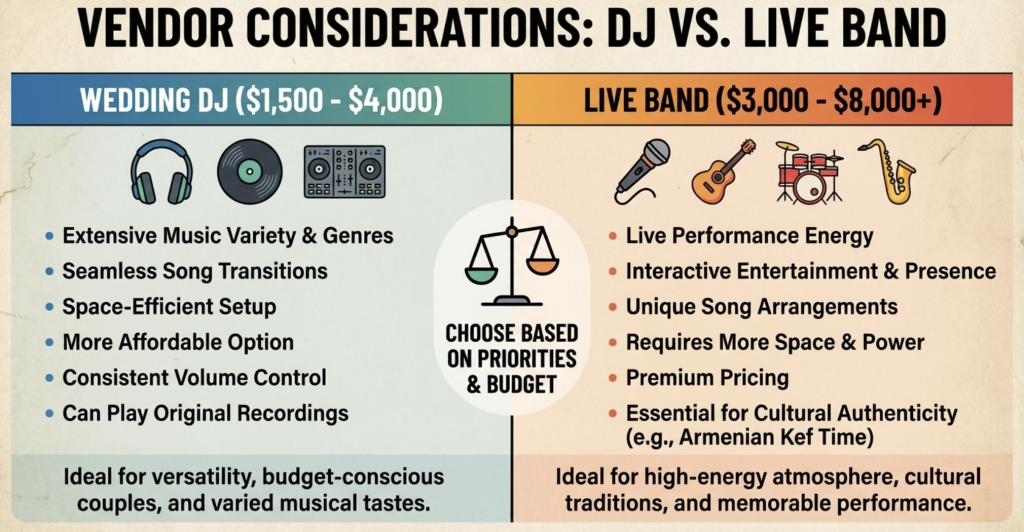
Advantages of DJs
Music variety: Can play any song exactly as recorded across unlimited genres
Consistency: Music never stops; seamless transitions
Space efficient: Smaller equipment footprint
Cost effective: Generally $1,500-$4,000 vs. $3,000-$8,000+ for bands
Volume control: Easier to adjust for venue and guest comfort
Requests: Can play any guest request if they have the song
Advantages of Live Bands
Live energy: Performance element creates special atmosphere
Entertainment value: Watching live musicians is engaging
Unique arrangements: Songs sound different (sometimes better) than recordings
Sophisticated feel: Often perceived as more elegant
Cultural authenticity: Essential for some cultural traditions
Hybrid Approach
Many couples, especially for cultural weddings, use both:
Live band for cultural portions: Armenian band for kef time, Indian musicians for sangeet elements
DJ for contemporary music: Pop, hip-hop, current hits played by DJ
Coordination is key: Ensure band and DJ coordinate seamlessly on transitions and timeline.
For comprehensive vendor coordination guidance, review our wedding planning timeline for Los Angeles.
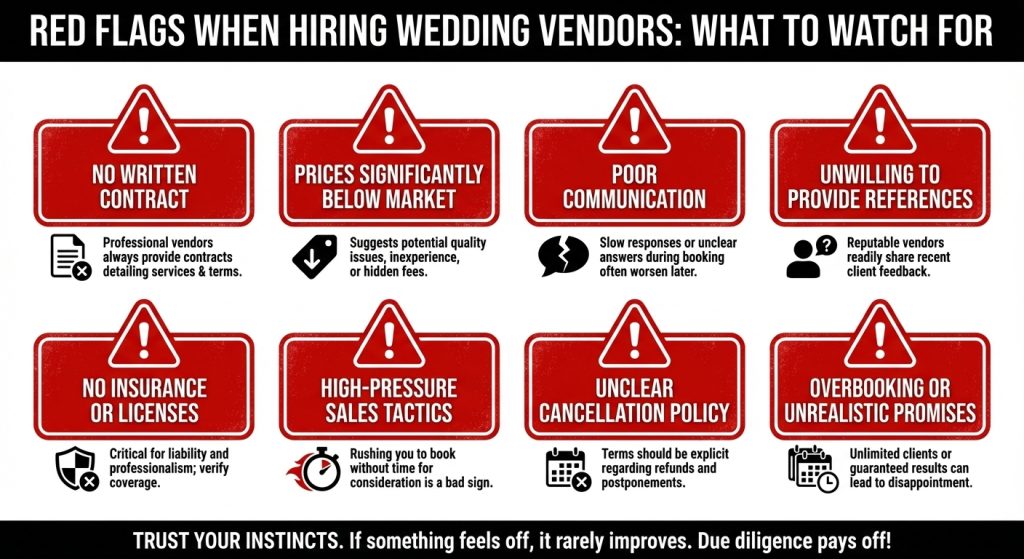
Red Flags: When to Keep Looking
Communication Red Flags
❌ Slow response times or unreturned calls
❌ Vague answers to specific questions
❌ Unwillingness to meet before booking
❌ Won’t provide contract before collecting deposit
❌ Can’t provide references
Experience Red Flags
❌ Fewer than 25 weddings performed
❌ Only club or party experience, no weddings
❌ Can’t demonstrate MC skills
❌ Doesn’t ask questions about your vision
❌ No backup DJ plan
Equipment Red Flags
❌ Consumer-grade speakers and equipment
❌ No backup equipment
❌ Unclear about what’s included
❌ Setup time seems too short
❌ No mention of sound check
Professionalism Red Flags
❌ No business insurance
❌ No written contract
❌ Cash-only payment
❌ Significantly cheaper than market rates
❌ Pressure tactics to book immediately
Personality Red Flags
❌ Doesn’t listen to your preferences
❌ Dismissive of your ideas
❌ Too rigid or inflexible
❌ Jokes or language making you uncomfortable
❌ You just don’t like them
Booking Timeline and Costs
When to Book Your DJ
Peak season Saturdays: 10-12 months ahead
Off-peak dates or Friday/Sunday: 6-9 months ahead
Last-minute bookings: Sometimes possible but limits selection
Book DJs after securing your venue but relatively early in vendor booking process. Great DJs book quickly.
Los Angeles DJ Pricing
Budget DJs ($1,200-$2,000):
- Newer DJs building experience
- Basic equipment
- Limited music library
- Less experience reading crowds
Mid-range DJs ($2,000-$3,500):
- Solid experience (50-100 weddings)
- Professional equipment
- Extensive music library
- Reliable performance
Premium DJs ($3,500-$6,000+):
- Extensive experience (200+ weddings)
- Top-tier equipment
- Sophisticated mixing skills
- Enhanced services (uplighting, photo booths, etc.)
What affects pricing:
- Experience level and reputation
- Equipment provided
- Reception length
- Peak vs. off-peak dates
- Additional services (uplighting, photo booth)
- Travel distance to venue
Understanding overall wedding vendor costs in Los Angeles helps you budget appropriately across all categories.
Working with Your DJ: Planning Process
Initial Planning Meeting
After booking, schedule a planning meeting (often 1-2 months before wedding) to discuss:
Timeline review: Share your reception timeline; coordinate with DJ
Music preferences: Discuss must-plays, genres, do-not-play list
Special moments: Plan first dance, parent dances, special announcements
MC style: Confirm announcement preferences and formality level
Logistics: Confirm setup time, location, power access
Music Submission
Most DJs request final music selections 2-4 weeks before your wedding:
What to provide:
- Ceremony song choices
- Key moment songs (first dance, parent dances, etc.)
- Must-play list (10-20 songs)
- Do-not-play list
- General preferences and energy direction
Final Confirmation
Week before wedding, confirm:
- Arrival and setup time
- Final timeline
- Any last-minute changes
- Emergency contact information
- Vendor meal arrangements
Day-Of Tips for Great DJ Performance
Setup Logistics
Ensure venue provides:
- Adequate power outlets
- Setup space away from kitchen/service traffic
- Tables for equipment if needed
- Clear path for equipment load-in
Timing: DJs typically arrive 2-3 hours before reception start for setup and sound check.
Communication During Event
Designate point person: Assign one person (planner, maid of honor, trusted friend) to communicate with DJ during reception rather than multiple people giving conflicting instructions.
Trust their expertise: If your DJ suggests adjusting timeline or music based on crowd energy, trust their professional judgment.
Vendor Meals
DJs need to eat. Ensure your venue provides vendor meal at appropriate time (usually during guest dinner service).
Your Entertainment Success Starts with the Right Venue
How to choose a wedding DJ requires understanding their full role, evaluating experience and personality fit, asking comprehensive questions, and planning music thoughtfully. The right DJ elevates your entire reception, creating energy that keeps guests dancing and memories that last forever.
Your DJ’s performance is enhanced by great venue acoustics, adequate space, and professional atmosphere. Venues experienced with wedding receptions understand DJ needs and facilitate smooth entertainment experiences.
Find Venues That Support Great Entertainment
The venue you choose impacts your DJ’s ability to create exceptional experiences. Proper acoustics, adequate equipment space, appropriate layout, and professional staff coordination all contribute to entertainment success.
Zaal connects you with Los Angeles venues providing the foundation for successful wedding entertainment.
Here’s how Zaal helps you choose entertainment-friendly venues:
✅ Acoustic quality information: Understand which venues have great natural acoustics versus those requiring significant sound management.
✅ Space specifications: See equipment setup areas, dance floor sizes, and layout details ensuring your DJ has what they need.
✅ Vendor experience insights: Learn which venues coordinate smoothly with entertainment professionals versus those creating logistical challenges.
✅ Cultural expertise verification: For Armenian or other cultural weddings requiring live bands plus DJs, identify venues experienced coordinating complex entertainment setups.
✅ Timeline flexibility confirmation: Understand which venues accommodate extended celebrations when music and dancing naturally continue past standard timeframes.
Whether you’re planning celebrations at Glendale ballrooms with excellent acoustics, outdoor venues requiring particular sound considerations, or any of dozens of exceptional LA spaces, choosing entertainment-friendly venues creates better experiences for your DJ and guests.
Once you’ve secured your venue, you can confidently book entertainment knowing your space supports great performance.
Explore entertainment-friendly venues on Zaal today to find spaces where DJs thrive and guests dance all night.
Your perfect reception starts with the right venue. Zaal helps you find it.
Frequently Asked Questions
How much should I budget for a wedding DJ in Los Angeles?
Budget $2,000-$3,500 for experienced, professional wedding DJs in Los Angeles. This range provides solid experience (50-100+ weddings), professional equipment, extensive music libraries, and reliable performance. Budget DJs ($1,200-$2,000) may have less experience or basic equipment. Premium DJs ($3,500-$6,000+) bring exceptional experience, sophisticated mixing skills, and often enhanced services like uplighting. Your DJ budget is typically 8-10% of your total wedding budget. For $50,000 wedding, allocate $4,000-$5,000 for entertainment; for $30,000 wedding, plan $2,400-$3,000.
Should I choose a DJ or live band for my wedding?
Choose based on priorities and budget. DJs ($1,500-$4,000) offer unlimited music variety, seamless transitions, space efficiency, and lower cost. Live bands ($3,000-$8,000+) provide performance energy, entertainment value, and sophisticated atmosphere. Consider your priorities: music variety and cost favor DJs, while live energy and elegance favor bands. Many couples, especially for cultural weddings, use hybrid approaches with live bands for cultural portions (Armenian kef time, for example) and DJs for contemporary music. Your venue size and acoustics also matter; small spaces suit DJs better while large ballrooms showcase bands beautifully.
What questions should I ask when interviewing wedding DJs?
Essential questions include: How many weddings have you performed? Have you worked at our venue? Can you provide recent references? What’s your MC style? What equipment do you provide? Do you have backup equipment and backup DJ? What’s included in your package? When do we finalize music selections? How do you handle timeline management? What happens if you’re sick? Are you insured? Can we see videos of you MCing? How do you read crowds and adjust music? What’s your payment schedule and cancellation policy? These questions reveal experience, professionalism, personality fit, and whether they’re prepared for your wedding.
When should I book my wedding DJ?
Book wedding DJs 8-12 months before your wedding date, especially for peak season Saturdays (April-June, September-November). Top DJs book quickly for popular dates. For off-peak dates (January-March, July-August) or Friday/Sunday weddings, 6-9 months ahead typically provides good selection. Book DJs after securing your venue (since your date depends on venue availability) but relatively early in your vendor booking timeline. If you’re planning a shorter timeline, contact DJs immediately; sometimes great DJs have availability 3-6 months out, but you’ll have limited selection.
Do wedding DJs take requests from guests?
Most professional wedding DJs take reasonable guest requests that fit the celebration vibe and keep the dance floor energized. However, good DJs filter requests through professional judgment, declining songs that would clear the dance floor or conflict with your stated preferences. Discuss your request policy with your DJ: some couples want open requests, others prefer DJs stick closely to planned music. Most DJs strike balance, accommodating requests that maintain energy while protecting against inappropriate or mood-killing songs. Your DJ’s ability to manage requests diplomatically while keeping guests happy is a sign of experience.
What should be on my do-not-play list for my wedding DJ?
Your do-not-play list should include songs you genuinely dislike or that are inappropriate for your celebration. Common do-not-play items include: songs from past relationships, explicit or offensive lyrics, specific genres you hate (if you despise country music, say so), overdone wedding clichés you find cheesy (Chicken Dance, Macarena, unless you actually want them), songs with bad memories, or anything that makes you uncomfortable. Don’t make your list too restrictive; overly long do-not-play lists limit your DJ’s ability to read crowds and adapt. Focus on genuine dealbreakers rather than songs you’re merely indifferent about.
How do I ensure my DJ plays music my diverse guests will enjoy?
Communicate your guest demographics to your DJ: age ranges, cultural backgrounds, music preferences. Professional DJs excel at mixing music appealing to multiple generations and backgrounds. Typical approaches include: starting with classic crowd-pleasers everyone knows, mixing eras throughout the night (not segregating by decade), reading crowd response and adjusting, balancing your personal favorites with universally loved songs, and creating energy progression from dinner background music through high-energy dancing. Trust your DJ’s experience reading diverse crowds. Most reception music should have broad appeal; save niche songs for specific moments when particular groups are dancing.
What happens if my DJ gets sick or has an emergency on my wedding day?
Professional DJs and DJ companies have backup plans for emergencies. When interviewing DJs, explicitly ask: “What happens if you’re sick or can’t make our wedding?” Acceptable answers include: backup DJs on call from their company, network of professional DJs they partner with for emergencies, or comprehensive contingency plans. Red flag: “That won’t happen” or “I’ve never missed a wedding.” Even reliable people have emergencies, medical crises, accidents, or family situations. Reputable DJs carry business insurance and maintain backup relationships. This question separates true professionals from amateurs who haven’t planned for worst-case scenarios.