

Choosing your wedding venue is the most impactful decision in your entire planning process. Your venue sets your date, influences your budget, determines guest capacity, shapes your aesthetic, and impacts every other vendor decision you’ll make. Get this choice right, and planning flows smoothly. Get it wrong, and you’ll face endless compromises and frustrations.
Yet with hundreds of venue options across every style and price point, how to choose a wedding venue that truly fits your needs rather than just looking beautiful in photos? How do you evaluate spaces objectively when emotions run high, and Pinterest inspiration overwhelms practical considerations?
This comprehensive guide provides a systematic framework for wedding venue selection. You’ll learn which factors matter most, what questions expose potential problems, how to compare venues accurately, and what red flags indicate you should keep searching. Whether you’re just beginning your search or narrowing final choices, this guide ensures confident, informed decisions.
Let’s find your perfect venue.

Start with Your Foundation: Non-Negotiables
Before touring a single venue, establish your foundational requirements. These non-negotiables eliminate incompatible venues immediately, saving time and preventing distraction by beautiful spaces that simply won’t work.
Guest Count Capacity
Your realistic guest count is your first filter. If you’re inviting 250 people, don’t tour venues maxing at 200. If you’re planning an intimate 50-guest celebration, massive ballrooms feel empty and cost unnecessarily.
How to determine your number:
- Create preliminary guest lists from both families
- Be realistic about who you’ll actually invite (not “maybe” guests)
- Add 10-15% buffer (guest counts typically grow during planning)
- Understand cultural expectations (Armenian weddings typically host 250-400+)
Capacity considerations:
- Cocktail style accommodates more guests than seated dinner
- Dance floors require 3-4 square feet per guest minimum
- Ceremony and reception in same space affects capacity calculations
- Outdoor venues need weather backup reducing actual capacity
For detailed guidance on evaluating capacity alongside other factors, use our comprehensive wedding venue checklist.
Budget Parameters
Establish your realistic venue budget before falling in love with spaces you can’t afford. Your venue typically consumes 45-50% of your total wedding budget.
Budget reality check:
- If total budget is $40,000, venue/catering budget is $18,000-$20,000
- If total budget is $70,000, venue/catering budget is $31,500-$35,000
- Remember service charges (18-22%) and tax (9-10% in LA) add 25-30% to base quotes
Budget includes:
- Venue rental fee
- Catering (typically per-person pricing)
- Bar service
- Service charges and gratuities
- Sales tax
- Tables, chairs, linens (if not included)
- Setup and breakdown
Understanding wedding venue costs in Los Angeles helps you establish realistic budget parameters from the start.
Date Flexibility
How flexible are you on dates? This dramatically impacts options and pricing.
Most flexible (best availability and pricing):
- Open to any season
- Friday, Sunday, or weekday weddings acceptable
- Off-peak months (January-March, July-August)
Moderately flexible:
- Specific season but flexible on exact date
- Saturday preferred but Friday/Sunday acceptable
- Avoiding specific dates (holidays, family events)
Least flexible (most competition):
- Specific date chosen (anniversary, meaningful date)
- Peak season Saturday (April-June, September-November)
- Holiday weekends
Pro tip: Friday evening or Sunday afternoon weddings at the same venue can save 20-40% compared to Saturday night pricing with identical beautiful space and service.
Location Requirements
Where must your venue be located? Consider:
Guest convenience: If 80% of guests live in the San Fernando Valley, don’t choose a Malibu venue requiring 90-minute drives through canyons.
Cultural considerations: Armenian families in Glendale often prefer venues within their community where extended family easily attends.
Traffic patterns: LA traffic is real. A venue requiring guests to cross town during Friday rush hour creates a poor experience regardless of how beautiful the space.
Parking accessibility: Venues with ample free parking provide better guest experience than those requiring valet ($1,500-$3,000 additional cost) or limited street parking.
Essential Evaluation Criteria
Once you’ve established non-negotiables, evaluate venues against these critical factors:
Aesthetic and Atmosphere
Your venue’s aesthetic influences your entire wedding look. Consider:
Architectural style: Modern industrial loft, classic ballroom, rustic barn, garden estate, contemporary rooftop? Choose aesthetic naturally complementing your vision rather than fighting against venue style.
Decoration needs: Beautiful venues require minimal decoration, saving budget and stress. Blank-canvas spaces offer flexibility but require more vendor coordination and expense.
Lighting quality: Natural light creates gorgeous photos but requires window coverage for evening events. Chandeliers and elegant fixtures reduce additional lighting needs.
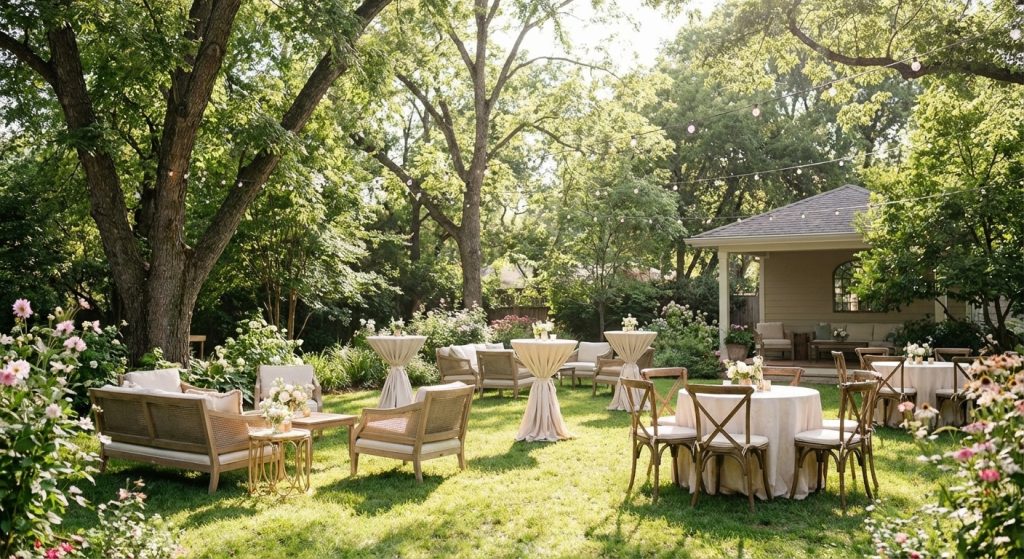
Indoor/outdoor options: California weather is generally reliable, but backup plans matter. Outdoor wedding venues in Los Angeles should offer weather contingencies.
Photo opportunities: Look for beautiful backdrops for portraits, interesting architectural details, and spaces photographers can use creatively.
Practical Logistics
Beautiful spaces must also function well logistically:
Layout efficiency: Can guests flow naturally from ceremony to cocktail hour to reception? Excessive walking between areas, especially for elderly guests, creates poor experience.
Kitchen facilities: If venue provides catering, proper kitchen facilities ensure hot food arrives quickly. If bringing outside catering, confirm kitchen adequacy.
Restroom accessibility: Adequate, clean restrooms positioned conveniently. For 200 guests, you need substantial restroom facilities.
Climate control: Heating and air conditioning appropriate for your season and guest count. Inadequate climate control ruins guest comfort.
Acoustics: Does the space amplify sound beautifully or create echo chaos? Live music venues need proper acoustics.
Accessibility: Wheelchair access, elevators if multi-level, accessible restrooms. Ensuring elderly or disabled guests can fully participate matters.
Load-in access: For vendors bringing equipment, furniture, or décor, easy load-in access prevents logistical nightmares.
Included Amenities and Services

Understand exactly what’s included versus what costs extra:
Furniture and rentals:
- Tables, chairs, linens included?
- Specialty furniture (lounge areas, cocktail tables) available?
- If not included, what’s the rental cost addition?
Kitchen and bar equipment:
- Full kitchen facilities for caterer use?
- Bar equipment, glassware provided?
- Ice machines, refrigeration adequate?
Audio/visual equipment:
- Sound system and microphones included?
- Projector and screen if you want slideshows?
- Lighting equipment or just basic illumination?
Coordination services:
- Day-of coordinator included in package?
- Setup and breakdown handled by venue?
- Dedicated point person assigned?
Ceremony space:
- Separate ceremony location on property?
- Setup/breakdown included or separate charge?
- Chairs, arch, sound system for ceremony?
Vendor Policies
Venue vendor policies significantly impact your planning freedom and budget:
Catering requirements:
- In-house catering required or outside caterers allowed?
- If in-house, is food quality acceptable? (Always do tastings!)
- If outside catering allowed, are there approved vendor lists or total freedom?
Bar policies:
- In-house bar required or can you provide alcohol?
- If you provide alcohol, what’s the corkage fee? ($15-$35 per bottle adds up)
- Bartender requirements and costs?
Vendor restrictions:
- Can you choose any photographer, florist, DJ?
- Preferred vendor lists mandatory or just suggestions?
- Vendor restrictions often mean venue receives commissions
Décor limitations:
- Can you hang things from ceilings?
- Candles allowed (real flame vs. battery)?
- Restrictions on décor placement or timing?
Sound restrictions:
- Noise ordinances limiting music volume or end time?
- Restrictions impacting your celebration style?
Timeline and Flexibility
Access hours:
- What time can vendors access for setup?
- How many hours do you have the venue?
- What time must everything be cleared out?
Ceremony and reception timing:
- Can you do both at same venue?
- Time between ceremony and reception adequate?
- Flexibility if your ceremony runs long?
Package duration:
- Standard packages typically 5-6 hours
- Armenian or other extended celebrations may need 7-8 hours
- Overtime costs: $500-$2,000 per additional hour
Buffer time:
- Time for photos between ceremony and reception?
- Adequate cocktail hour length?
- Realistic timeline or rushed schedule?
Weather Backup Plans
Even in Los Angeles, weather surprises happen. For outdoor venues:
Backup space availability:
- Indoor space included in your package?
- Is backup space as beautiful as outdoor space?
- When must you decide on backup? (Most require 24-72 hours notice)
Tent options:
- Tenting available if you want outdoor despite weather?
- Tent rental costs and who coordinates?
- How long does tent setup take? (Factor into vendor timeline)
Seasonal considerations:
- Your wedding date’s typical weather patterns?
- Extreme heat or cold management plans?
- Guest comfort priorities?
Questions Every Couple Must Ask
Bring these questions to every venue tour. Their answers reveal whether venues truly fit your needs:
Availability and Booking
✓ “Is our preferred date available?”
✓ “How far ahead are you typically booked for that season?”
✓ “Do you have any other events the same day?” (venues booking multiple events can create parking/timing conflicts)
✓ “What’s your deposit and payment schedule?”
✓ “What’s your cancellation and postponement policy?”
Capacity and Space
✓ “What’s your capacity for seated dinner vs. cocktail-style?”
✓ “Can we see the space set up for a wedding similar to what we’re planning?”
✓ “Where would ceremony, cocktail hour, and reception occur?”
✓ “Do you have backup indoor space if weather is poor?”
✓ “What’s included in your standard setup?”
Financial Details
✓ “What’s included in your base package?”
✓ “What are your service charge and tax rates?” (This is crucial; some venues quote pre-tax/service, others all-inclusive)
✓ “What’s not included that we’d need to pay extra for?”
✓ “Do prices increase if our guest count goes up?”
✓ “What payment methods do you accept?”
✓ “Are there any additional fees we should know about?”
Food and Beverage
✓ “Can we schedule a tasting?”
✓ “Is catering in-house or do you work with specific caterers?”
✓ “Can we customize the menu?”
✓ “How do you handle dietary restrictions?”
✓ “What bar packages do you offer?”
✓ “Can we provide our own alcohol? If yes, what’s the corkage fee?”
✓ “Is champagne for toasts included or extra?”
Logistics and Services
✓ “What time can vendors access for setup?”
✓ “Do you provide day-of coordination? If yes, what does that include?”
✓ “How many staff will be working our event?”
✓ “Where can we get ready before the ceremony?”
✓ “What’s your rain backup plan?”
✓ “Do you have liability insurance requirements for us?”
Vendor and Décor Policies
✓ “Can we use any vendors or do you have preferred lists?”
✓ “Are there any vendor fees for outside professionals?”
✓ “What décor restrictions do you have?”
✓ “Can we bring in rentals or is furniture included?”
✓ “Are there sound/noise restrictions?”
For comprehensive question lists organized by topic, reference our detailed venue selection checklist.
Red Flags: When to Keep Looking
Some warning signs indicate you should continue your search:
Communication Red Flags
❌ Slow or unresponsive communication during the courting phase (it only gets worse after booking)
❌ Evasive answers to direct questions about pricing or policies
❌ Pressure tactics rushing you to book before you’re ready
❌ Unwillingness to provide contracts before collecting deposits
❌ Can’t provide recent client references
Pricing Red Flags
❌ Prices significantly below market rates (suggests quality issues or hidden fees)
❌ Vague pricing without itemized quotes
❌ Surprise fees appearing after initial quote
❌ Unclear cancellation policy or no refunds under any circumstances
❌ Pressure to pay large deposits immediately
Venue Condition Red Flags
❌ Poor maintenance (worn carpets, damaged furniture, dirty restrooms)
❌ Outdated facilities that haven’t been refreshed in years
❌ Inadequate climate control for your season
❌ Safety concerns (poor lighting, uneven surfaces, code violations)
❌ Insufficient parking creating guest stress
Service Red Flags
❌ Overbooked schedules (multiple events same day creating rushed timelines)
❌ Inexperienced staff who can’t answer basic questions
❌ Negative online reviews citing consistent issues
❌ Inflexibility on reasonable requests
❌ No backup plans for emergencies
Making Your Final Decision
You’ve toured multiple venues. Now how do you decide?
Create a Comparison Framework
Don’t rely on emotion alone. Build a spreadsheet comparing:
Venue details:
- Name, location, contact
- Capacity and layout
- Date availability
Costs:
- Base venue fee
- Per-person catering cost
- Bar package cost
- Total estimated cost (including service charge and tax)
- Deposit and payment schedule
What’s included:
- Furniture and rentals
- Coordination services
- Setup/breakdown
- Ceremony space
Vendor policies:
- Catering (in-house, preferred list, or open)
- Other vendors (restricted or flexible)
Pros and cons:
- List specific strengths
- Note concerns or limitations
Trust Your Instincts
Data matters, but so does intuition:
The feel test: How did you feel in the space? Could you envision your celebration there? Did you feel welcomed and valued?
The excitement test: When you think about each venue, which one genuinely excites you versus just checking boxes?
The stress test: Which venue and team felt like partners versus vendors? Who understood your vision?
Involve Key Stakeholders Appropriately
Bring to tours: Your partner, potentially your parents if they’re contributing financially
Don’t bring: Your entire bridal party, all extended family, or anyone making decisions more complicated
Get input without decision paralysis: Listen to concerns from those attending tours, but ultimately you and your partner decide
Sleep on It
If possible, don’t book the same day you tour. Give yourself 24-48 hours to:
- Process the experience
- Review notes and photos
- Compare options objectively
- Discuss with your partner without tour excitement clouding judgment
However, in competitive markets like Los Angeles, don’t delay excessively or your preferred date may book.
Special Considerations for Different Wedding Styles
Cultural Weddings
Armenian weddings and other cultural celebrations have specific needs:
Larger guest counts: Plan for 250-400+ guests versus typical 150-200
Extended timelines: 6-7 hour receptions versus standard 5-hour packages
Cultural expertise: Staff understanding traditions like kef time, family dances, traditional toasts
Cuisine authenticity: Venues excelling at traditional cultural dishes
For cultural celebrations, choosing venues with proven expertise in your traditions eliminates stress and ensures authentic experiences. Explore Glendale’s Armenian wedding venues specializing in traditional celebrations.
Intimate Weddings (Under 75 Guests)
Small weddings need right-sized spaces:
Avoid: Massive ballrooms making small groups feel lost
Seek: Private dining rooms, boutique venues, garden spaces scaled appropriately
Consider: Restaurants with buyout options, small event spaces, residential venues
Large Celebrations (250+ Guests)
Large weddings require:
Adequate capacity: Confirmed 250+ seated capacity with proper dance floor space
Logistics expertise: Experience managing large-scale events smoothly
Sufficient staffing: Higher staff-to-guest ratios preventing service delays
Ample parking: 150+ parking spaces or shuttle coordination
Outdoor Weddings
Outdoor celebrations require additional considerations:
Weather backup: Confirmed indoor backup space or tenting options
Guest comfort: Heating, cooling, shade, restroom access
Lighting: Sunset timing and artificial lighting needs
Sound: Proper amplification for outdoor acoustics
Accessibility: Pathways suitable for all mobility levels
Your Venue Search Made Simple
How to choose a wedding venue doesn’t have to be overwhelming. With clear priorities, systematic evaluation, and the right questions, you can confidently select a space that fits your vision, accommodates your guests comfortably, and creates the foundation for your perfect celebration.
The process we’ve outlined here works, but it traditionally requires weeks of research, dozens of phone calls, scattered information across emails and websites, and endless coordination just to schedule tours at venues meeting your basic criteria.
Streamline Your Venue Search with Zaal
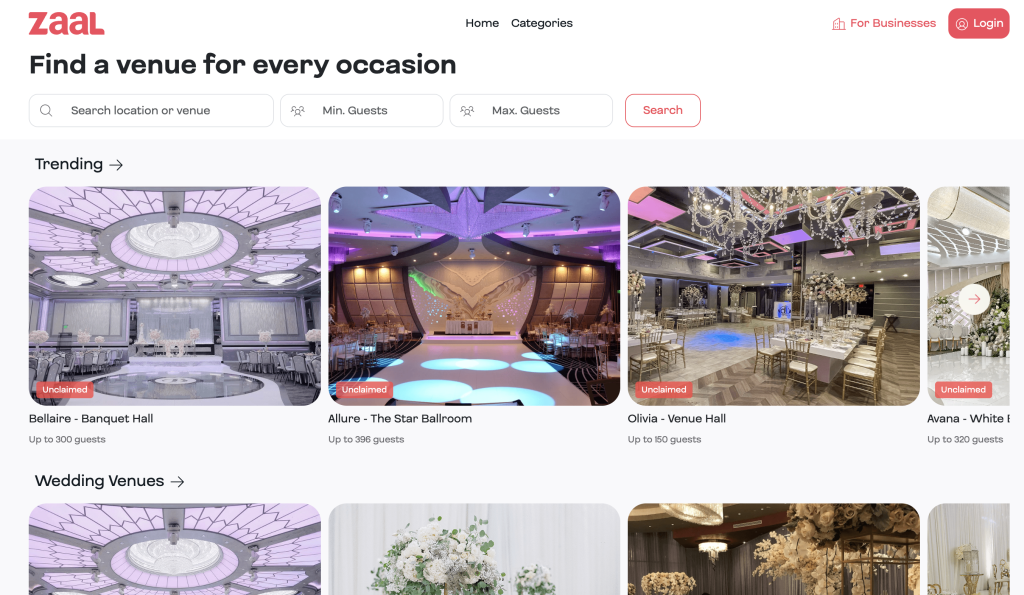
Zaal was created specifically to eliminate the frustration and time waste from traditional venue searching, making the process we’ve described above dramatically more efficient.
Here’s how Zaal transforms venue selection:
✅ Filter by your non-negotiables instantly: Set your guest count, budget, date, and location parameters to see only venues actually matching your requirements. No wasting time on incompatible spaces.
✅ Compare venues systematically: View capacity, pricing, included amenities, vendor policies, and photos side-by-side, creating the comparison framework this guide recommends without manual spreadsheet work.
✅ Access transparent information upfront: See what’s included, understand costs, learn about vendor policies, and read reviews before investing time in tours.
✅ Check real-time availability: Know immediately which venues have your date open, eliminating the frustrating back-and-forth of calling venues only to discover they’re already booked.
✅ Schedule tours efficiently: Book multiple venue visits through one organized platform, managing your entire search in one place rather than across scattered emails and phone calls.
✅ Use expert selection tools: Access our comprehensive venue checklist, guides, and resources helping you evaluate venues using the framework outlined in this guide.
✅ Read verified reviews: Learn from other couples’ experiences at venues you’re considering, understanding real pros and cons beyond marketing materials.
Whether you’re searching for elegant ballrooms in Glendale, outdoor gardens and estates, culturally-expert Armenian venues, or any of dozens of exceptional Los Angeles spaces, Zaal connects you with options matching your specific needs and makes the entire selection process dramatically faster and more organized.
The venue selection framework in this guide is sound, but executing it traditionally takes 3-4 weeks of research and coordination. With Zaal, you can move from research to decision in days, not weeks, while making better-informed choices because you have comprehensive information organized systematically.
Start your venue search with Zaal today to filter by your priorities, compare options efficiently, and book the perfect venue with confidence.
Choosing your wedding venue doesn’t have to be overwhelming. Zaal makes it simple, organized, and actually enjoyable.
Frequently Asked Questions
How many wedding venues should I tour before making a decision?
Most couples should tour 3-5 venues before deciding. Touring just one or two doesn’t give adequate comparison points, while touring more than five often creates decision paralysis and confusion. The key is doing thorough research beforehand so the venues you tour already match your basic requirements (capacity, budget, location, aesthetic). If your first tour is perfect and checks every box, you don’t need to tour five more just to hit an arbitrary number. However, most couples benefit from comparing a few options to understand what matters most to them and confirm their choice.
What’s the most important factor when choosing a wedding venue?
While every couple prioritizes differently, guest capacity and budget alignment are the most critical universal factors. A venue that can’t accommodate your actual guest count or exceeds your realistic budget simply won’t work regardless of how beautiful it is. After confirming capacity and budget fit, prioritize based on your personal values: some couples prioritize location convenience for guests, others aesthetic beauty, others included services and vendor flexibility. There’s no single “most important” factor beyond capacity and budget; identify what matters specifically to you and your partner rather than following generic advice.
Should I book the first venue I love?
Not necessarily. While you shouldn’t endlessly tour venues creating decision paralysis, touring at least 2-3 venues provides comparison context helping you understand if your “love” is based on genuine fit or just excitement from your first tour. However, in competitive markets like Los Angeles, don’t delay excessively. If a venue checks all your boxes, fits your budget, has your date available, and you genuinely love it, booking after touring 2-3 options is perfectly reasonable. Just ensure you’ve asked all critical questions and reviewed the contract carefully before signing.
How far in advance should I book my wedding venue?
For peak season Saturday dates (April-June, September-November) at popular Los Angeles venues, book 12-18 months ahead. For off-peak dates (January-March, July-August) or Friday/Sunday weddings, 8-12 months typically provides good selection. However, timelines vary by market and specific venue popularity. Some sought-after venues book 18-24 months ahead, while others have availability 6 months out. Start your search as early as possible to access the best selection, but don’t panic if you’re planning a shorter timeline; beautiful venues exist at various booking windows, especially if you’re flexible on dates or days of the week.
What percentage of my wedding budget should go to the venue?
Wedding venues typically consume 45-50% of your total budget, including catering, bar service, and venue fees. If your total budget is $50,000, plan to allocate $22,500-$25,000 for venue and catering. If your total budget is $80,000, venue and catering might be $36,000-$40,000. This percentage is higher in Los Angeles than national averages due to higher venue costs and larger typical celebrations. However, venue percentages can shift based on priorities: couples prioritizing venue and food might allocate 50-55%, while those prioritizing photography and florals might reduce venue allocation to 40-45%. Use 45-50% as a starting guideline, then adjust based on your specific priorities.
Can I negotiate wedding venue pricing?
Sometimes, though success varies by venue and market conditions. You’re more likely to negotiate successfully if: you’re booking an off-peak date (Friday/Sunday or slow season), the venue has recent availability suggesting lower demand, you’re booking far in advance giving them guaranteed revenue, or you’re flexible on certain package elements. Negotiation approaches that sometimes work include asking about off-peak discounts, package customization reducing unnecessary elements, or combining ceremony and reception for better rates. However, many popular venues, especially during peak season, have no pricing flexibility due to high demand. Always approach negotiation respectfully and be prepared to accept their answer gracefully.
What if I love a venue but it’s slightly over budget?
First, ensure you’re comparing true total costs including service charges (18-22%) and tax (9-10%), not just base quotes. If a venue is truly over budget after all costs, consider: booking an off-peak date (Friday/Sunday saves 20-40%), reducing guest count (every 25 fewer guests saves $2,500-$5,000), simplifying your package (choosing less expensive bar option, simpler menu), or reallocating budget from other categories (smaller florals, less elaborate favors, simpler invitations). If these adjustments don’t work, the venue truly doesn’t fit your budget. Stretching beyond comfortable budget limits creates stress and potential debt; better to choose a venue you can actually afford and enjoy planning.
How do I choose between two venues I love equally?
Create a detailed comparison addressing: total costs (itemized and honest), what’s included in each package, vendor flexibility and policies, guest experience factors (parking, accessibility, flow), timeline and flexibility, venue team responsiveness and professionalism, and any specific concerns or limitations. If they’re still equal after objective comparison, consider: which venue team made you feel more valued and understood, which space felt more “you” emotionally, and which location is more convenient for your guests. Sometimes talking through pros and cons with your partner reveals that you don’t actually love them equally; one edges ahead when you’re honest about priorities. Trust that either choice will create beautiful celebrations; perfect is the enemy of good.